
What should you do if you have had missing teeth for many years?
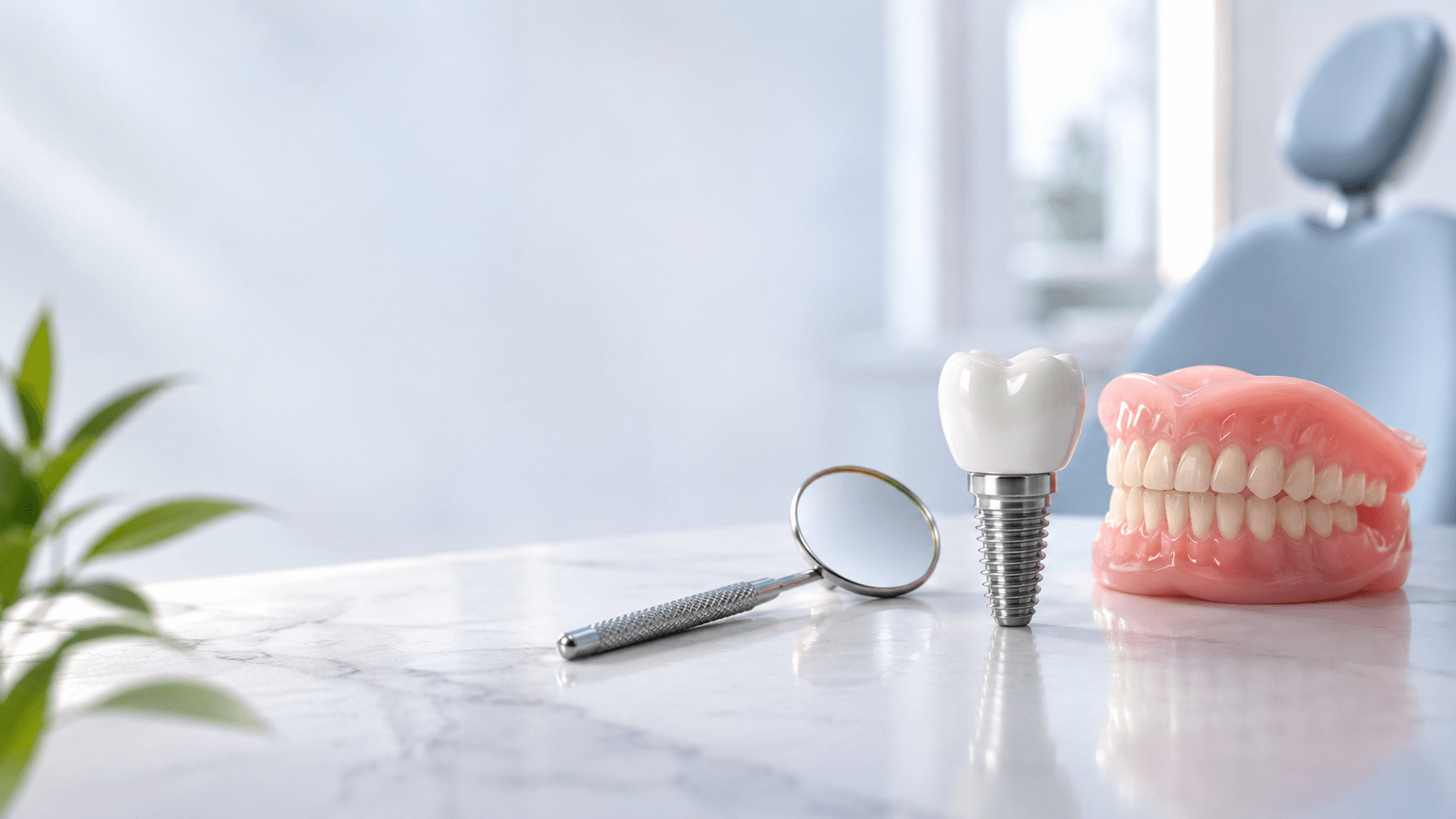
Losing one, several or even all teeth does not mean they can no longer be replaced. Even after 5, 10 or 20 years, modern dentistry offers options from removable dentures to implants and full-arch restoration.
However, prolonged tooth loss may affect jawbone, neighbouring teeth and bite. Treatment must account for changes over those years.
In brief: missing teeth can often be restored even many years later. Before implants, bone, gums and bite must be assessed. If bone is insufficient, the doctor may suggest additional procedures or another prosthetic option. Time without teeth alone does not determine implant suitability.
What happens when teeth are missing for a long time?
Tooth loss changes more than your smile. Teeth contribute to chewing, distribute forces and influence neighbouring tooth positions.
Leaving gaps untreated may gradually cause the following changes.
1. Jawbone volume decreases
Bone around the tooth root may lose volume over time. This is called bone resorption.
Its speed and extent vary with the cause of loss, bone condition, overall health and other factors.
The American College of Prosthodontists notes that jawbone changes gradually after extraction and can be substantially reduced many years later.
2. Neighbouring teeth may move
Adjacent teeth may gradually tilt into gaps. Teeth in the opposing jaw may also change position.
Replacing one tooth can consequently require more complex planning later than immediately after loss.
3. The bite may change
Missing teeth change chewing-force distribution. This may affect remaining teeth and eating comfort.
4. Chewing and speech may become difficult
This particularly affects people missing many teeth. Hard foods may be harder to chew, and pronunciation of some sounds may change.
Can implants be placed 10 or 20 years after tooth loss?
Yes, in many cases. Long-standing tooth loss does not automatically rule out implants.
The key is not elapsed years, but whether bone and overall health allow safe placement.
Before treatment, the dentist assesses:
- bone volume and quality;
- gums and oral mucosa;
- number and location of missing teeth;
- positions of remaining teeth;
- bite characteristics;
- overall health, including chronic conditions;
- whether implants can be placed without additional procedures.
Detailed planning may require cone-beam computed tomography to assess jaw anatomy and implant positions.
Do not conclude that implants are impossible just because teeth have been missing for years. Equally, suitability cannot be guaranteed without examination.
What if there is insufficient bone for implants?
Insufficient jawbone volume is common after prolonged tooth loss.
Implants require suitable anatomy. If bone is insufficient, several options may be considered.
Bone grafting
The doctor adds special material where bone volume is lacking.
The aim is to create conditions for later implant placement.
Cleveland Clinic describes grafting before implants or in other circumstances where bone loss affects oral health.
Not everyone needs grafting. Diagnostics determine this.
Sinus lift
Long-standing loss in the back of the upper jaw may leave insufficient bone height near the maxillary sinus.
Some cases use a sinus lift to create additional space for graft material.
The surgeon determines necessity after examination.
Other implant or prosthetic options
The doctor may suggest different implant positions, another arch-restoration plan or prosthetics without implants.
This depends on anatomy. No technique suits everyone; complex surgical options require a separate risk assessment.
Start with a match, not a random list of clinics
Answer a few questions and see which factors matter for your case
What restoration options exist after many years?
Treatment depends on missing-tooth numbers, bone and remaining natural teeth.
| Treatment option | When considered |
|---|---|
| Single implant with crown | One missing tooth and suitable implant conditions |
| Bridge | Adjacent teeth or implants can provide support |
| Partial removable denture | Several missing teeth with some natural teeth remaining |
| Complete removable denture | All teeth missing in the upper or lower jaw |
| Implant-supported denture | Improved denture retention is needed |
| All-on-4 / All-on-6 | A full arch is restored with a structure on several implants |
These are not interchangeable for all patients. Bridges need suitable supports; implants need adequate anatomy and surgical risk assessment.
NHS and the American College of Prosthodontists describe implants, bridges and removable dentures as main replacement methods.
All teeth missing: would All-on-4 or All-on-6 suit me?
An implant-supported full-arch restoration is one possible option for a toothless jaw.
All-on-4 supports a complete restoration on four implants.
All-on-6 supports the restoration on six implants.
Both can restore one jaw. Implant numbers must not be chosen solely by procedure name or advertised price.
The doctor must consider:
- available bone volume;
- correct implant positioning;
- future chewing forces;
- prosthetic design;
- opposing jaw condition;
- additional procedures needed.
The American College of Prosthodontists describes All-on-4 as a full-arch option, including some posterior bone-loss cases. This does not mean it suits everyone with insufficient bone.
Can teeth be replaced without implants?
Yes. Implants are not the only option.
If medically unsuitable or surgery is unwanted, a dentist may offer removable dentures.
Complete dentures replace all teeth in a jaw; partial dentures are used when some natural teeth remain.
Prosthetics still require individual planning.
After years without teeth and major ridge changes, stable denture retention may be harder to achieve.
Dentures may also need adjustment or replacement as gums and jawbone change shape.
How long does restoration take?
Duration depends on the method.
Removable dentures, bridges and implants have different stages.
For implants, the doctor may plan:
- Diagnostics and a treatment plan.
- Treatment of oral disease, if present.
- Bone grafting or other preparation if needed.
- Implant placement.
- Healing.
- Fabrication and fitting of the final restoration.
- Follow-up examinations.
Some cases receive temporary teeth during healing. A temporary restoration does not mean all stages are complete.
For treatment abroad, establish separate trip numbers beforehand. Read “How many trips are needed for dental treatment abroad?”.
- Treatment & materials
- Hotel nights
- Transfers
- Coordinator-translator
Can teeth be restored after 50 or 60?
Yes. Older age alone does not make restoration impossible.
The decision primarily depends on oral condition, bone, overall health and treatment choice.
Before implants, tell the dentist about chronic diseases, previous surgery and medicines.
With diabetes, for example, the doctor assesses glucose control, tissue healing and complication risks.
What should be checked before treatment abroad?
After long-standing tooth loss, an individual plan is particularly important rather than simply accepting a package.
Before booking, ask:
- Which examinations assess my jaw?
- Is there sufficient bone for implants?
- Could grafting or a sinus lift be needed?
- Which treatments suit my case?
- Why does the doctor recommend that implant count?
- Will I have temporary teeth?
- How many stages and trips are needed?
- What is included and charged separately?
- How are reviews arranged after returning home?
Do not accept implants solely because of a low price or attractive result photos.
Request a written plan, estimate and explanation of extras. Read “What should a dental treatment estimate abroad include?”.
How does Medikout help restore teeth abroad?
If one, several or all teeth have been missing for years and you do not know where to start, Medikout helps find overseas dental clinics handling similar cases.
The process starts by clarifying missing-tooth numbers, when they were lost, denture use and treatment considered.
Medikout helps send enquiries to partner clinics, obtain information on options and arrange a free consultation.
Before travelling, clarify preliminary cost, stages, extra diagnostics and follow-up arrangements.
Clinic selection is free for patients.
Medikout is not a dental clinic, does not diagnose or guarantee implant suitability. The dentist determines the final plan after examination.
Start with a match, not a random list of clinics
Answer a few questions and see which factors matter for your case
Frequently asked questions
Can I get implants after 10 years without teeth?
Possibly. Jawbone, gums and overall health must be assessed. Ten years without teeth is not automatically a contraindication.
What about 20 years?
Restoration may still be possible, but bone may have changed substantially. The doctor determines implant suitability, grafting needs or alternative prosthetics.
Is bone grafting always required?
No. It depends on available bone, jaw anatomy and planned implant positions.
Can implants replace all missing teeth?
Some cases allow full-arch implant restoration, including All-on-4 or All-on-6. Diagnostics determine the choice.
Which is better: removable dentures or implants?
There is no universal answer. Implants can support fixed or removable restorations but require surgery. Removable dentures offer a non-implant alternative. The doctor should explain benefits and limitations.
Can it be done in one trip?
It depends. Some prosthetic treatments finish in one trip; implants sometimes require stages separated by healing.
Where should I start after years without teeth?
Book a prosthodontist consultation. They assess oral condition, necessary tests and options. You need not decide implant numbers yourself.
This article is informational and does not replace medical consultation.
References
- American College of Prosthodontists — Missing Teeth
- American College of Prosthodontists — Frequently Asked Questions about Dentures
- American College of Prosthodontists — Dental Implants FAQ
- Cleveland Clinic — Dental Bone Graft
- NHS — Dentures
- American Dental Association — Missing Teeth
- American Dental Association — Denture Care and Maintenance